
Specialist Tank Decommissioning
Taking a fuel or oil tank out of service requires the right expertise, equipment and documentation. Border Tank Services decommissions tanks safely and professionally, helping protect your site, your staff, the public and the environment.
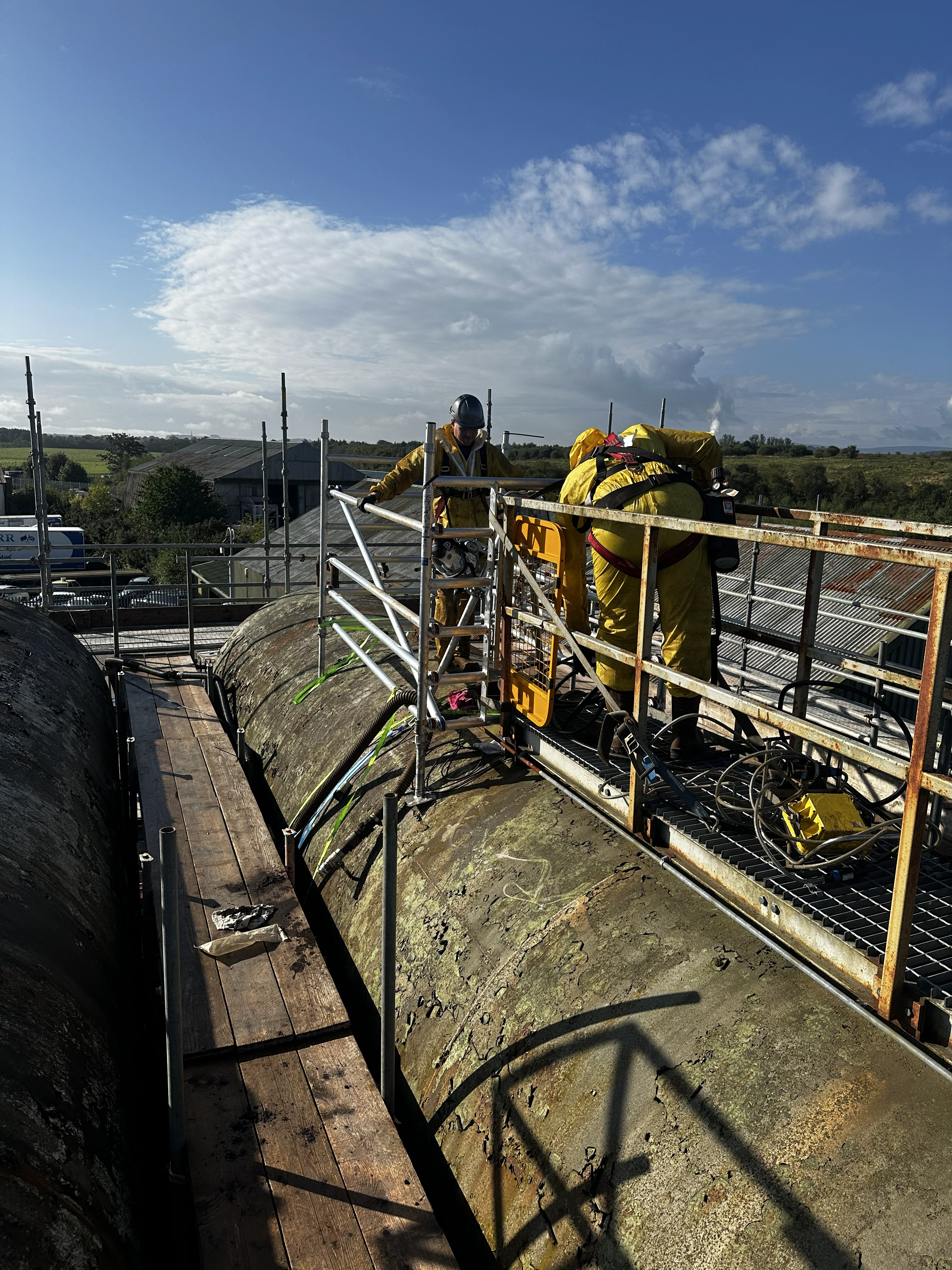
Safe. Compliant. Documented.
Tank decommissioning that protects you, your site, and the environment
Tank decommissioning must be handled carefully. Old tanks can contain hazardous residue, vapour, sludge or contaminated fuel that needs specialist management.
Our trained engineers follow the correct decommissioning process, which may include removing remaining contents, cleaning the tank, gas monitoring, degassing, dismantling and arranging compliant disposal.
We work with farms, commercial premises and industrial sites to make sure redundant tanks are taken out of service safely and responsibly.
Once complete, we provide appropriate documentation, giving you clear evidence that the tank has been decommissioned and disposed of correctly.
Why It Matters
This Is Not a Job for General Contractors
Fuel tank decommissioning involves explosive vapours, hazardous waste, and legal documentation. The consequences of cutting corners are severe.
OFTEC-certified engineers
Every decommissioning is carried out by fully trained, certified, and licensed engineers - not general contractors. Certification means you can be confident the job meets the required standard.
Environmental compliance
Oil and fuel tank decommissioning is governed by strict environmental regulations. Our procedures ensure there is no risk of contamination to soil, groundwater, or drainage - protecting you from regulatory liability.
Corporate responsibility documentation
Businesses and commercial landlords have a responsibility to ensure tanks are removed and disposed of correctly. We provide the paperwork to prove you have acted responsibly - important for audits, insurance, and due diligence.
Zero compromise on safety
Gas monitoring before any cutting work is non-negotiable. Residual vapours in a tank are a serious explosion risk. Our engineers follow rigorous safe-working procedures on every job, regardless of tank size or condition.
Step by Step
How We Decommission Your Tank
A rigorous, documented process - from initial assessment to final certificate.
Site assessment & access planning
We assess the tank location, size, and access requirements. Where the tank is at height or in a confined space, we plan any scaffolding or equipment needed before work begins.
Contents removed safely
All remaining fuel is pumped out of the tank before decommissioning begins. Useable fuel can be set aside for transfer or storage - we discuss this with you at the assessment stage.
Vacuum cleaning & gas monitoring
The interior of the tank is vacuum-cleaned to remove residues and sludge. Our engineers use calibrated gas monitors to confirm that no flammable or toxic gases remain before any cutting or dismantling takes place.
Dismantling & removal
Once safe, the tank is dismantled and removed from your site. We handle all lifting, transportation, and logistics - leaving the site clean and clear on completion.
Licensed disposal
The tank and its residues are disposed of as controlled hazardous waste at a licensed facility, fully compliant with UK and Scottish environmental waste regulations.
Decommissioning certificate issued
On completion we issue the appropriate decommissioning paperwork, providing documented proof that the tank has been removed and disposed of responsibly - essential for your corporate compliance records.
Need a replacement tank installed?
We supply and install a full range of commercial and industrial fuel storage tanks. Combining decommissioning and installation in a single project minimises site disruption and often reduces overall cost.
View tank supply & installationReady to arrange your decommissioning?
Call us to discuss your tank - we will ask the right questions, plan the job properly, and give you a clear written quote with no hidden costs.
Out of hours? We respond to all online enquiries the next working day.
Common Questions
Questions About Tank Decommissioning
Answers to the questions we are asked most often.